

Galvanized steel wire is a critical component in modern infrastructure, widely used across power transmission, telecommunication, construction, and industrial sectors. By coating steel with zinc, galvanized wires gain significant resistance to corrosion, making them ideal for outdoor and high-stress applications. HNBFCABLE, a leading steel wire manufacturer, specializes in producing high-quality galvanized steel wire designed to meet international standards and industrial requirements.
These wires are essential in applications where both strength and durability are required. In power transmission, they serve as the core in Aluminum Conductor Steel Reinforced (ACSR) cables, providing tensile support while the aluminum conducts electricity efficiently. In telecommunications, they function as guy wires to stabilize poles and towers, ensuring structural safety in varying environmental conditions. Beyond utilities, galvanized steels wires are used in construction for scaffolding and tensioning systems, as well as in agriculture for fencing and vine support.
HNBFCABLE focuses on precise manufacturing, rigorous testing, and compliance with international standards such as ASTM, BS, and GB. This ensures that each wire offers reliable performance, long-term durability, and consistent quality. In this guide, we will explore the manufacturing process, technical specifications, applications, and best practices for using high-quality galvanized steels wire.
Understanding Galvanized Steel Wires
Galvanized steel wires is steel that has been coated with a layer of zinc to protect it from corrosion. This coating prevents rusting when exposed to air and moisture. The process of galvanization ensures that the steels wire has a longer service life, especially in outdoor applications.
The primary purpose of galvanized steels wires is to provide mechanical strength and support in structures while resisting environmental degradation. The wire can be used as a core for Aluminum Conductor Steel Reinforced (ACSR) cables, where the steel core provides tensile strength and the aluminum conductor ensures electrical conductivity.
Galvanized steels wires is categorized by the type of zinc coating, wire diameter, tensile strength, and flexibility. These factors determine where and how the wire can be used, whether for telecommunication poles, power transmission lines, construction support, or agricultural fencing.
Manufacturing Process of Galvanized Steel Wires
Producing high-quality galvanized steel wire involves several critical steps:
- Wire Drawing: Steel rods are drawn through progressively smaller dies to reduce diameter. This increases tensile strength and ensures uniformity along the wire length.
- Cleaning: Drawn wires are cleaned using chemical solutions to remove rust, scale, and other contaminants. Proper cleaning ensures a smooth and even galvanization layer.
- Galvanization: Zinc coating is applied either through hot-dip or electro-galvanization methods. Hot-dip galvanization involves immersing the wire in molten zinc, while electro-galvanization uses an electric current to deposit zinc.
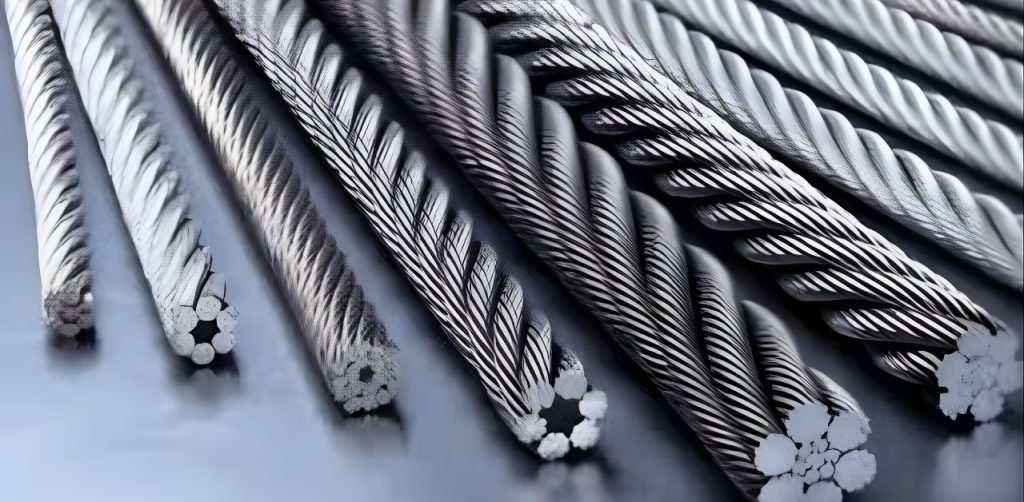
- Stranding (Optional): Multiple galvanized wires are twisted together to create a stranded wire. Stranding increases flexibility, distributes mechanical load, and enhances tensile performance.
- Testing: Each batch is tested for tensile strength, elongation, zinc coating thickness, and dimensional accuracy.
- Packaging: Wires are wound on reels or rolls and prepared for transportation, ensuring protection against physical damage and corrosion.
Applications of HNBFCABLE Galvanized Steels Wires
Galvanized steels wire has multiple industrial and construction applications:
- Overhead Power Lines: Serves as the steel core in ACSR cables, providing support and tensile strength for electricity transmission.
- Telecommunication Poles: Used as guy wires to stabilize poles and towers in various terrains and weather conditions.
- Construction Support: Reinforces structures like scaffolding, tension systems, or temporary frameworks.
- Agriculture: Functions as fencing, trellising, or vine support due to durability and resistance to rust.
- Industrial Uses: Secures equipment, anchors loads, or is used in machinery where strength and corrosion resistance are required.
The versatility of galvanized steels wire makes it suitable for applications where strength and longevity are critical.
Technical Specifications
HNBFCABLE galvanized steels wire is manufactured according to international standards to meet mechanical and chemical requirements. Key specifications include:
- Standards Compliance: ASTM A475, BS 183:1972, GB 1200-88.
- Zinc Coating Classes:
- Class A: 185–290 g/m²
- Class B: 520 g/m²
- Class C: 780 g/m²
- Tensile Strength: High, medium, or extra-high strength grades depending on application requirements.
- Wire Diameter: Typically varies between 2 mm to 10 mm, with precise tolerances.
- Construction: Available in single wires or stranded configurations, depending on flexibility and load requirements.
These specifications ensure the wire meets industry demands for electrical, civil, and structural applications.
Performance in Real-World Applications
Galvanized steels wire is designed to maintain mechanical performance while resisting environmental damage. Its main performance indicators include:
- Tensile Capacity: Can support heavy loads without permanent deformation.
- Corrosion Resistance: Zinc coating protects steel from oxidation over long-term outdoor exposure.
- Flexibility: Stranded wires bend and twist without compromising strength.
- Load Distribution: Stranded configuration spreads stress evenly across the wire.
These performance traits make the wire reliable for long-term installation in energy, construction, and telecommunication projects.
Advantages of Stranded Galvanized Steel Wire
Stranded galvanized steel wire offers several advantages over single solid wires:
- Load Sharing: Strands distribute mechanical tension across multiple wires, reducing the chance of failure.
- Flexibility: Easier to handle and install in curves, bends, or varying angles.
- Durability: Maintains tensile strength while resisting fatigue under repeated stress.
- Integration: Works efficiently as the core of ACSR cables or tension-support systems.
Stranded construction is particularly important in applications where wires must endure dynamic loads or environmental stress.
Packaging and Delivery
Proper packaging ensures wires arrive at the installation site in optimal condition:
- Roll Packaging: Suitable for smaller quantities; allows easy handling and storage.
- Wooden or Polywood Reels: Protect wires from mechanical damage during transportation.
- Steel-Reinforced Reels: Used for heavier or larger orders to prevent deformation or tangling.
- Protection Measures: Ends are secured, and surfaces are coated or wrapped to maintain galvanization integrity.
Well-organized packaging also reduces installation delays and material wastage.
Industry Standards and Compliance
HNBFCABLE galvanized steels wire adheres to international quality and safety standards:
- ASTM A475: Specifies zinc-coated steels wire for mechanical performance.
- BS 183:1972: Defines requirements for galvanized steel stay wires.
- GB 1200-88: Chinese standard for galvanized steels wires with specific zinc coatings.
Compliance ensures consistent mechanical properties, corrosion resistance, and dimensional accuracy, making the wires suitable for regulated infrastructure projects.
Sustainability and Material Efficiency
Galvanized steel wires is highly recyclable. Key points of efficiency include:
- Recyclable Steel Core: The steel base can be reused without losing mechanical integrity.
- Long Lifespan: Zinc coating delays degradation, reducing replacement frequency.
- Reduced Waste: Efficient production methods minimize scrap during wire drawing and galvanization.
- Energy Use: Hot-dip galvanization and electro-galvanization processes are optimized to reduce energy consumption.
Sustainable manufacturing practices reduce the environmental footprint of industrial steels wires applications.
Installation Guidelines
Proper installation ensures the longevity and safety of galvanized steels wires:
- Correct Tensioning: Apply load within the tensile capacity of the wire to prevent stretching or breakage.
- Secure Anchoring: Fix both ends with clamps or anchor hardware suitable for the wire diameter.
- Splicing: Use approved splicing techniques for continuity in length without compromising strength.
- Inspection: Check zinc coating for scratches or damage, particularly at connection points.
- Environment Consideration: Avoid direct contact with chemicals or abrasive surfaces that can degrade the coating.
Following these guidelines ensures optimal performance and minimizes maintenance requirements.
Technical Case Study: Performance of ASTM A475 Wire
Although specific case studies are not described here, HNBFCABLE ASTM A475 galvanized steel wires are tested under real-world conditions for:
- Corrosion Resistance: Retains zinc coating integrity in humid or coastal environments.
- Mechanical Strength: Maintains rated tensile strength under operational loads.
- Durability: Stranded wires sustain repeated stress without deformation.
- Installation Ease: Flexibility allows for efficient handling and tensioning during construction.
The results confirm that wires manufactured according to ASTM A475 standards perform reliably in various applications.
Future of Galvanized Steel Wire
The demand for high-quality galvanized steels wires is expected to grow with expanding energy, construction, and telecommunication infrastructure. Key developments include:
- Higher Tensile Grades: Wires that support heavier loads and longer spans.
- Improved Zinc Coating: Thicker or more uniform coatings for enhanced corrosion resistance.
- Advanced Stranding Techniques: Increasing flexibility and mechanical performance.
- Integration in Modern Cables: Serving as cores in hybrid power and communication cables.
- Sustainability: Greater recycling of steel and energy-efficient galvanization processes.
HNBFCABLE’s focus on quality, standard compliance, and mechanical reliability ensures it is well-positioned to meet evolving industry needs.
Conclusion
In summary, galvanized steel wire is a fundamental material for modern infrastructure, offering a combination of strength, durability, and corrosion resistance. HNBFCABLE, as a reputable steel wire manufacturer, produces high-quality galvanized steel wire that meets international standards and rigorous industrial requirements. These wires are versatile, serving critical roles in power transmission, telecommunications, construction, and agricultural applications.
Through precise manufacturing, including wire drawing, cleaning, galvanization, and stranding, HNBFCABLE ensures each wire maintains consistent mechanical performance and long-term reliability. Compliance with standards such as ASTM, BS, and GB guarantees the wires are suitable for various operational environments, from coastal regions to industrial installations. Stranded wires provide flexibility and efficient load distribution, while zinc coatings protect the steel core from corrosion, extending the service life of infrastructure and reducing maintenance needs.
For engineers, contractors, and project managers, choosing HNBFCABLE galvanized steel wire means selecting a product that combines mechanical strength, durability, and consistent quality. Proper installation, handling, and adherence to specifications ensure optimal performance across applications. With ongoing advancements in production techniques and sustainable practices, HNBFCABLE continues to provide reliable solutions for infrastructure projects worldwide.